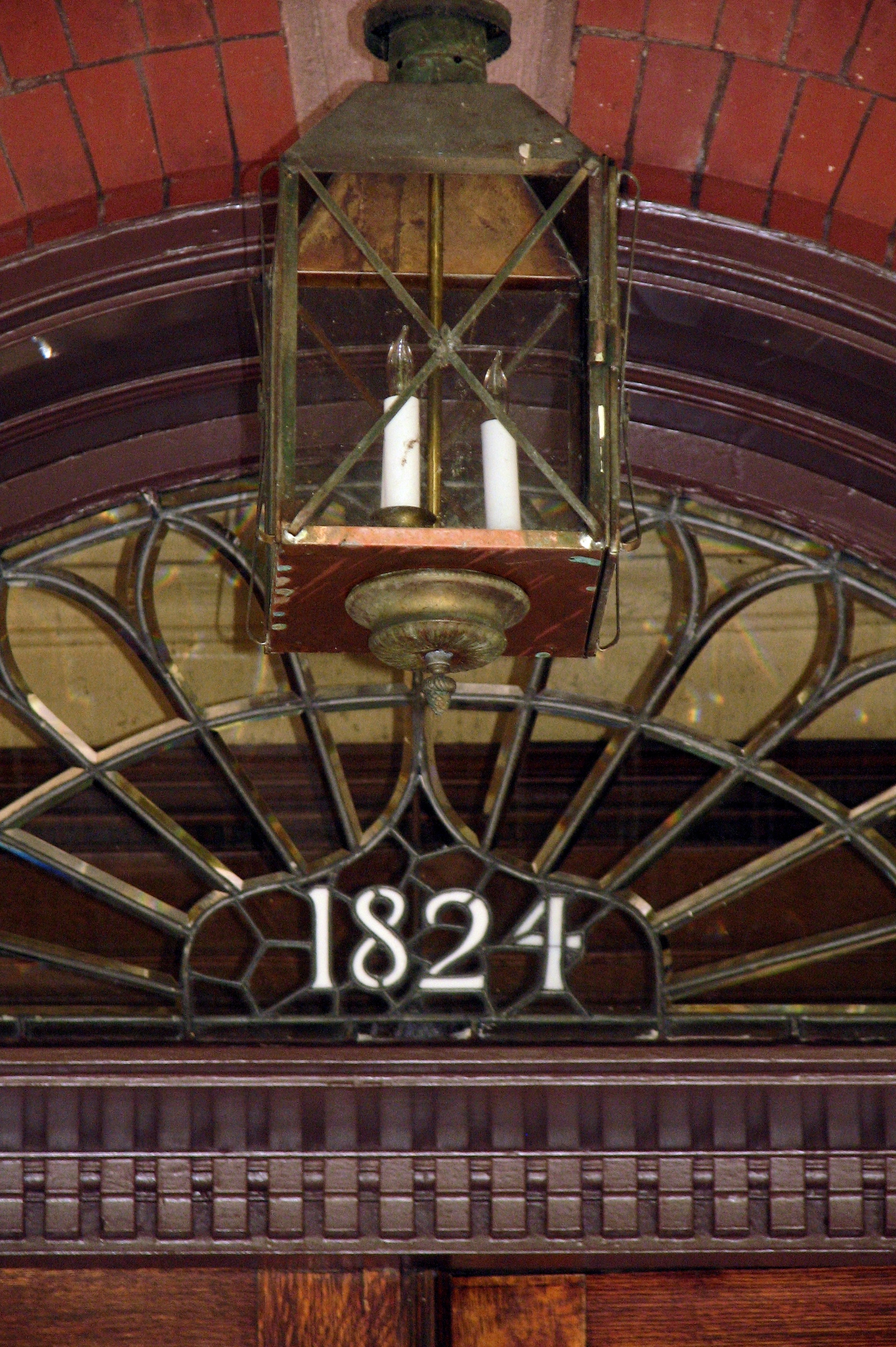
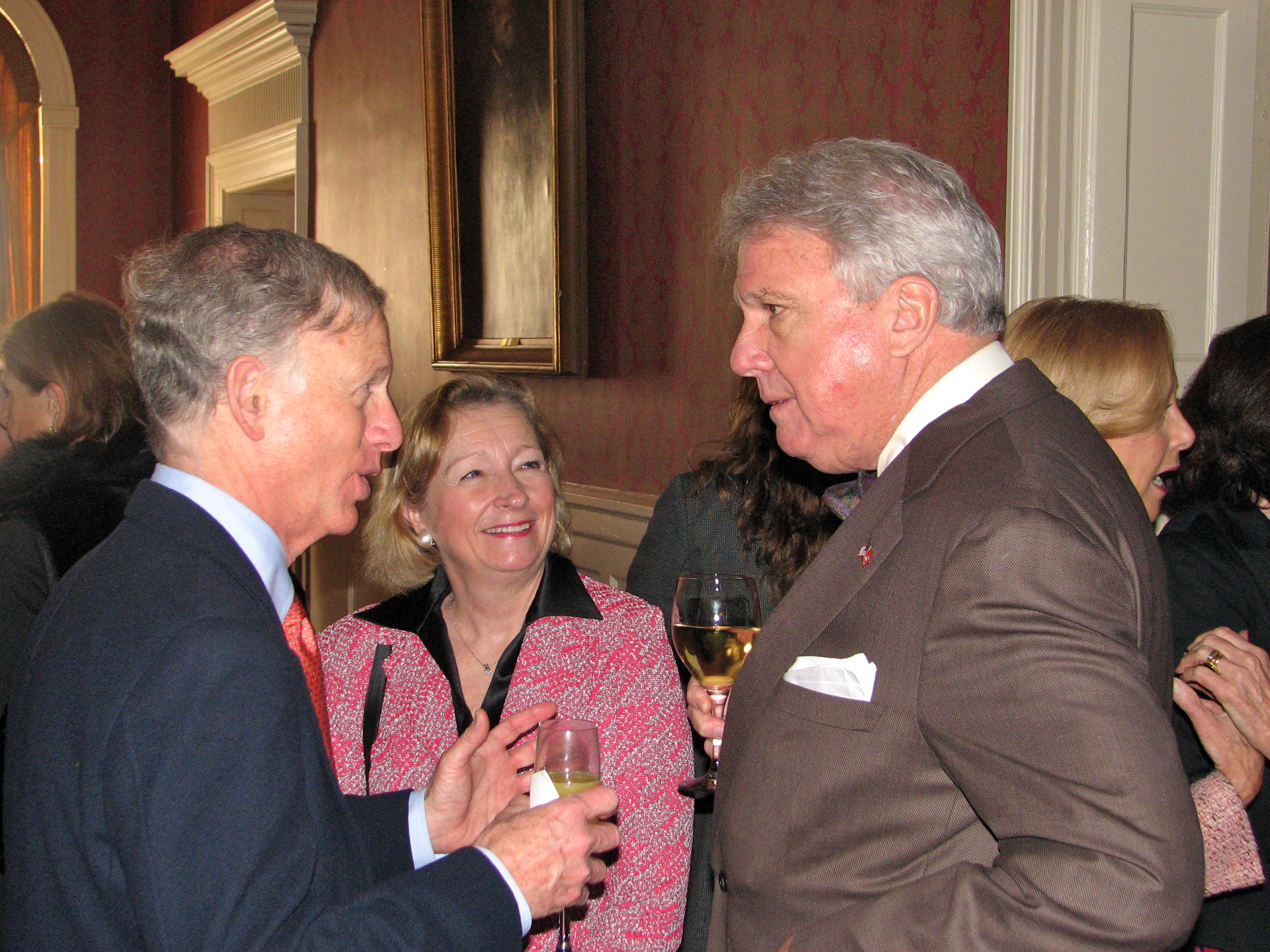
In the final stages of writing, my editor suggested that I eliminate an entire chapter. Retrospect shows that she was right, although I had grown attached to this fantastical chapter! I do believe in ghosts, and certainly did imagine meeting the ghosts of Isaac and Amelia as I walked through the hallways of 1824 Monument Avenue. Read on, and let me know what you think of the “missing chapter.” Should I have included it, or was the editor right?
Chapter Twelve: I Believe in Ghosts
2007
Every week as our car plunked along the old cobblestones of Monument Avenue to Beth Ahabah for Sunday School, Dad would point to the familiar brick and brownstone house and proclaim, “there’s Isaac and Amelia’s house!” Three little pairs of eyes dutifully gazed to the left as we passed 1824 Monument before circling around the Robert E. Lee monument. Even after my sisters looked away, I pressed my cheek against the window, straining to see the house until it disappeared from view as we swung around the giant statue of Lee on his stone horse.
I still turn my head to look at the handsome house, now an apartment building, every time I drive past. Sometimes I pull over and park for a minute just to stare at it from across the median. Systematically scanning its three stories of windows and balconies from top to bottom, I search for the ghosts of my great-great grandparents, Isaac and Amelia Thalhimer. I have imagined them so vividly and so many times that sometimes I’m convinced I see them on the second floor balcony.
Smoke swirls from Isaac’s Havana cigar, a hint of a smile forming under his curled mustache. Under a head of jet-black hair, his dark complexion sets off his deep-set brown eyes and curved eyebrows. His gold pocket watch hangs from his vest, its chain extending across his plump belly to a belt loop holding a gold cigar clipper. Nodding his head to acknowledge me, Isaac’s pinstriped coat flaps against the iron railing.[i]
I nod back.
Amelia stands just behind her husband, one hand holding layers of her wide hoop skirt and bustle and the other hand waving gently to me. Her gray-brown hair swept up into a chignon held by tortoise shell clips, she smiles at me with a knowing look in her eyes. Having mothered two boys and five girls, she knows that I, too, am one of her children. I’m simply of another generation.
I imagine waving to them from the front sidewalk, shouting “Hi! I’m Elizabeth, your great-great granddaughter. Want to walk over to Perly’s for Reubens?”
Amelia shouts back, “Oh, that would be lovely! We’ll be right down.” Isaac places his hand gently on his wife’s shoulder as they step inside through the French doors, Amelia’s skirt billowing in the breeze.
I sit on the steps of the front porch, watching the crimson leaves spiral to the sidewalk. As the front door opens, I stand to greet my great-great grandparents. They don’t feel like ghosts at all. Their hands feel substantial and warm.
“We are so pleased to meet you, Elizabeth, ” says Amelia, squeezing my hand in hers. “We’ve been watching you pass by for many years, ever since you started attending Religious School at the Temple.”
“Mrs. Weidenfeld was my kindergarten teacher. I think you knew her too. She lived to be a hundred years old. She taught me, my dad, and my grandpa,” I tell them.
“I do recall Ruth,” says Isaac with a chuckle, clearly startled that we both knew the same person.
“I didn’t know you laughed, Isaac. Grandpa always said you were so serious.”
“Well, I lived during serious times,” he says, his face stiffening. “You know, I grew up during the Civil War, the most trying times this city ever saw. It made me tough. Made me into a man when I was really just a boy.”
Incredulous, I shake my head. “I’ve wanted to meet you for so long.”
Isaac ruffles my hair like I’m a child, but I don’t mind. “Well, let’s have lunch before it gets too late. Amelia could tell stories all day.”
Amelia frowns mockingly and shakes her head, muttering “Oh, Isaac.” She places her hand on my arm and leans in close to me, whispering, “He’s not usually this talkative. Must be your lucky day.”
As we stroll down West Franklin Street past Beth Ahabah, Amelia’s shoes make a clickety-clack sound with each step. Her feet are small like mine.
Isaac says, “I remember when the synagogue opened those big wooden doors for the first time. I sat on the board there for forty years and served as its president. When I held the Torah in my arms and looked up at the stained glass window that we – my brothers and sisters and I – dedicated to our parents, I felt them right there with me. The window shows the walled courtyards of King Solomon’s Temple. In the background, the hills of Judea look like the hills of Thairenbach, the town father came from.”
“I know that window,” I tell him excitedly. “We’ve gone to High Holy Day services here ever since I can remember. We used to arrive so early that we could reserve a whole pew for the family. Now just a few of us go.”
Isaac nods, pursing his lips, and groans, “Hmpf. How much do you prize your heritage? Think about what your forefathers strived and struggled for in the early period of their existence in a new land. Did they make sacrifices for their religion that you of today might go on and on to bigger, finer things?”[ii]
“Yes,” I reply uncomfortably, my heart thumping. “I suppose they did.”
“Elizabeth,” Amelia interjects, “I just want you to know how pleased I am to hear you’re working with the Ladies’ Hebrew Benevolent Society.”
Laughing to relieve the tension, I say, “They call it JFS now. Jewish Family Services.”
“I suppose a lot of changes have taken place since my day. I was the fifth president there, you know. I’m glad to know it’s still around.”
“As am I,” Isaac says with a bit more brightness in his voice. “When you are blessed with the means, giving back to your community is a responsibility and a privilege. Nothing counts so much in this life as the things we do for others – whether they be of our own flesh and blood or merely neighbors. It is not what you sell for, or what you cost, or what you earn, or what you own that counts – but what you contribute to the welfare of your fellowman.”[iii]
“Tikkun olam,” says Amelia. I recognize this phrase from Sunday School. It means “working together to repair the world.”
When we arrive at Perly’s, Isaac holds the door open for us and we take a seat by the front window. Our waitress brings glasses of ice water and hands us menus. No one seems to notice that Isaac and Amelia are ghosts, so I don’t make a big deal out of it.
“Anything to drink for you folks?” the waitress asks, tapping a pen on her tablet.
“Three lemonades, please,” Isaac responds, and the waitress hurriedly jots it on her pad and hightails it over to the bar.
Suddenly Isaac’s expression turns deadly serious and his dark eyebrows slant down towards the bridge of his nose like arrows.
“Late one night in 1861, just after I had turned six years old, I saw the reflection of fire flickering in the windows of our house,” Isaac says dramatically. “I went outside to see what was going on. A big, rowdy crowd made its way past the Old Market waving fiery torches in the air. I joined in, whooping and hollering. My friends and I slung rocks into the air. I didn’t know it then, but I know it now: it was the Great Secession Parade.
“The war broke out, and we were right in the middle of it.” Pausing for a sip of water, he continued, “Richmond became the Capitol of the Confederacy and President Jefferson Davis moved into the White House down on Clay Street.”
I cut in, “Did you ever meet him?”
“No, but my cousin William Flegenheimer did. He was a master penman and calligrapher. He signed Davis’ bail bond.”
“I’ve read Flegenheimer’s autobiography – well, the parts of it we still have. It’s amazing. Too bad you never wrote an autobiography like that,” I say to him pointedly.
“Well, I guess that’s your job,” Isaac responds with a grin.
The waitress arrives with our lemonades, and I unwrap a straw and start sipping. “Are you ready to order?” she asks.
“Three Reubens,” says Isaac briskly. “And a piece of chocolate pie for my granddaughter here.”
Astounded, I blurt out, “How did you know that’s my favorite?”
Isaac’s lips curl into a smile as he hands our menus to the waitress. But his smile fades quickly as he continues.
“Even during those dreadful war years, Father closed up shop on Saturdays to honor the Sabbath. My son changed that tradition later on, but I always made a point to observe the Sabbath. Tell me this, Elizabeth: does your family keep the Sabbath?”
“No,” I tell him, a bit embarrassed. “We never have. Not even once.”
“Well, that’s due to my son, no doubt.”
“I know why you feel that way,” I say, as sensitively as possible, “but he did some incredible things for the Jewish people. If you knew, it would make you very proud.”
“Hmpf. I’m interested to hear more sometime,” Isaac grumbles as the waitress returns to our table with our Reubens.
“Ready-mades like your dress were unknown back then,” says Amelia, readily changing the subject. “I can tell it was made with a machine.”
“Yes,” I tell her, holding out my arm as she scrutinizes the seams. “I can’t even sew on a button.” We giggle together.
“We spent hours and hours picking out fabrics by the yard, sifting through buttons, and holding up spools of thread to the light to make sure the dye coordinated perfectly. Sometimes it would take a month to get one dress just right.”
“The prettiest girl I had ever seen,” Isaac starts, “wore the most lovely dresses, made by her own hands. She was the eldest of four sisters, all of them orphans. The beautiful girl and I danced the Coquette, the Cauliflower, the Virginia Reel – sometimes into the wee hours of the morning. I managed to fill her dance card one night so she couldn’t steal a dance with another man.”
Amelia shakes her head, “A clever man, this one. And a fine dancer.”
“On buying trips to New York back in the summer of 1877, I wrote long love letters to my girl back in Richmond.”
“You have by your noble heart and soul won what no other mortal woman has succeeded in doing,” Amelia recalls, pretending to read his letter in dramatic fashion. “Dear Amelia…you are all I care for in a woman.”
“And you still are, my dear,” Isaac replies, kissing her hand. “You still are.”
The waitress returns with my chocolate pie, smiling at Isaac’s amorous gesture.
“We married the following year and set up house together,” Amelia continues. “My youngest sister Lina lived with us for most of her life. She never married. Poor little thing was born with lots of problems. She was deaf in one ear and blind in one eye. But she was the sweetest soul. Everyone loved her, all over town. Wherever she went, Lina carried her ear trumpet.”
Isaac blurted out, “Damn ear horn. Whenever Lina forgot that thing we’d have to shout straight in her ear.”
“Now, Isaac. Lina was a gentle soul.”
“She was a gentle soul,” Isaac conceded. “She checked the obituaries every day and attended every funeral she could. And not just for people she knew. She would attend services for complete strangers, weeping into her handkerchief as if she’d lost her dearest friend.”
I laugh. “My family still talks about Aunt Lina. Grandpa always says, ‘She meant well.’ ”
“Indeed,” Amelia chuckles. “She meant well.”
Smiling at the thought of Aunt Lina, we all sip our lemonades.
“You know, after Father died, The Store faced what could have been its undoing,” Isaac says. “Charles Hutzler, a shopkeeper and cousin on my mother’s side, had the gall to give my brothers and me five thousand dollars to become a partner in our business. Wanted to call the store ‘Thalhimers & Hutzler.’[iv] Well, we turned it down, thank God. Hutzler stayed on at The Store for four more years before he left to work at his father’s business down the street.
“After that, he thought banking was the big thing. He founded the Central National Bank and became its first president. It became one of the biggest banks in the city, and certainly the tallest. A very successful venture he ran until the day he died. Glad he found his calling. I served on the board of his bank, you know.”
“Grandpa did, too. The building’s still there, but the bank is long gone,” I tell him.
“Hmpf,” Isaac grunts. “I’ll never forget it. Hutzler wrote a thirty-four-page letter explaining why he should be made a partner. Thirty-four handwritten pages. Damn waste of paper, if you ask me.”
“Maybe so,” I muse, in awe of how much he sounds like Grandpa.
Then, a long pause falls over the table. I notice Isaac’s eyes looking over my shoulder out the picture window down Grace Street.
In a hushed tone, he says, “You know that we had five daughters in addition to our son William, your great-grandfather. But I want you to know something else. William was not our only son.”
I remain quiet, noting the grief in his wavering voice.
“We named him William Blum to honor his grandfather William and his mother’s family, the Blums. And when our next son was born, on the holy day of Yom Kippur in 1892, I said to Amelia, ‘This boy will be Isaac.’ The name was passed along to me by my father’s Uncle Isaak back in Germany. It means ‘may God smile.’ I hoped it would bring a smile to my boy’s lips when he thought of the strength and dignity of his people.
“As our boy grew into a toddler and started to walk, we gave little Isaac the pet name ‘Ira.’ When Amelia brought him to visit The Store, folks gathered around to see the dimples in Ira’s cheeks when he smiled. Rosy, round little cheeks. I suspected William and Ira would run the store together, just as my brothers and I…”
Isaac’s voice cracks with emotion as he bows his head. Unable to continue, he pauses to take a sip of his limeade.
Amelia gently pats her husband’s hand. She looks up at me and says, “One day in late April, just as the camellias were blooming, I watched out the window as Ira laughed on his rocking horse, those brown curls of his bouncing up and down.
“Little Ira started rocking so hard he almost fell. His mammy reached forward to balance him, but when she did, her cigarette grazed the horse’s tail. It burst into flames quicker than you can imagine, and Ira’s giggles turned into screams. I bolted out the back door like lightning. We did everything we could, everything we could think of, but it was no use. Dear Ira had already burned to death. He was only two years old.”
Suddenly, Isaac finds the strength to speak.
“Rabbi Calisch led a graveside service for our boy. We laid him in a silk-lined coffin at Hebrew Cemetery near my parents, blessed be their memory. After we lowered his tiny coffin into the ground, each of us tossed a handful of dirt into his grave. I watched the faces of my children. Tears streamed down their cheeks. As I watched William, just six years old at the time, I thought one thing and one thing only: You are the one, my son. You are the only one left. The Store will be yours.”
The waitress quietly takes our plates, noting the somber mood at the table. “I’ll bring your check in just a moment,” she says, resting a hand on my shoulder as I dab the corners of my eyes with my sleeves.
“That would be fine,” says Isaac as he hands me a silken handkerchief from his pocket.
“My dad’s hankies have his initials on them too,” I sniffle, not knowing what else to say.
As Amelia begins to gather her things, Isaac places a hundred dollar bill on the table. He says, “We don’t need to wait for the check.”
“Tell me more about The Store,” I beg Isaac, zipping my coat and shoving my hands in my pockets as we leave the restaurant and brace against the wind on Grace Street. “Aside from your son, who were your star employees?”
“Well, in the twenties, I hired Janie Mitchell as a buyer. A crackerjack gal. Never missed a season’s opening in all of her decades of work. First woman in the whole country to travel to Europe on a buying trip. Another treasure was my secretary, Miss Ida Smith. Best secretary a man could ever wish for.”
With this remark, I hesitate before commenting.
“You know, Ida’s career at Thalhimers lasted over fifty years,” I tell him.
“You don’t say!” Isaac responds.
“When The Store celebrated its one-hundredth anniversary, she spoke to a big gathering of employees and customers – over a thousand people. Grandpa was there, and Uncle Charles.
“But I have some terrible news about Ida. Only a year after the centennial, without any warning, she jumped out a fifth-story window at Fifth and Grace. Beside her body they found a pocketbook with three notes inside. She wrote one to her doctor, one to her sister – her only surviving relative – and one to her coworkers at Thalhimers to tell them about the work she left unfinished.” [v]
Isaac stops walking for a moment. He removes his hat and holds it over his heart.
“May she rest in peace,” he says. “I’m sorry to hear of the circumstances of her passing, but thank you for telling me.”
Amelia nods in agreement. “A dear, loyal woman and a steadfast soul.”
“But please tell me more,” I beg Isaac. “Tell me about Gramps. I mean, your son.”
“I knew William had the smarts and the ability to build the business. Such a serious, driven young man from the very beginning. I knew that when I died he could handle things without me. And his boys, William Jr. and Charles, they showed promise and interest. I tried to convey to them the importance of industry, integrity, and an unselfish life. Those are the keys, I tell you. Those are the keys.” [vi]
Rounding the familiar monument of Robert E. Lee, I know it’s almost time to say goodbye. Isaac says to me, “That’s all I can tell you, Elizabeth. The rest is for you to find out.”
I ask, “Is there anything I can do for you after I leave?”
Amelia faces me, looks directly into my eyes, holds both my hands in hers, and says, “Yes. There is one thing. I want you to go to Hebrew Cemetery and place a stone on Ira’s grave. I know no one visits him because he has no descendants. No one to remember him. I just don’t want my boy to be forgotten.”
Hugging her, I say, “I promise I won’t forget him. I won’t forget about you either. You have my word.”
Hand-in-hand, Isaac and Amelia walk up the front stairs and through the glass door, disappearing into the recesses of my overactive imagination. I drive down the cobblestones of Monument Avenue, my mind spinning like a wild carousel.
[i] Jacob, Charles Richmond. “I remember Mr. Ike.” Essay written for William B. Thalhimer III. Private collection of William B. Thalhimer III.
[ii] “Dear Book.” No. XVIII. Congregation Beth Ahabah. President’s report by Isaac Thalhimer. 12 Sep 1926.
[iii] “Dear Book.” No. XVIII. Congregation Beth Ahabah. President’s report by Isaac Thalhimer. 12 Sep 1926.
[iv] Hutzler, Charles to Isaac, Charles, Gus and Moses Thalhimer. Personal letter written 15 Aug 1883. In private collection of William B. Thalhimer III.
[v] “5-Story Drop Kills Veteran Woman Clerk.” Richmond Times-Dispatch. 5 June 1943.
[vi] “Prelude.” Poem written by Isaac Thalhimer’s children and grandchildren on the occasion of his 70th birthday. 1925. In private collection of Charles Williams, son of Aline Thalhimer Livingstone Farkas.
This slideshow requires JavaScript.







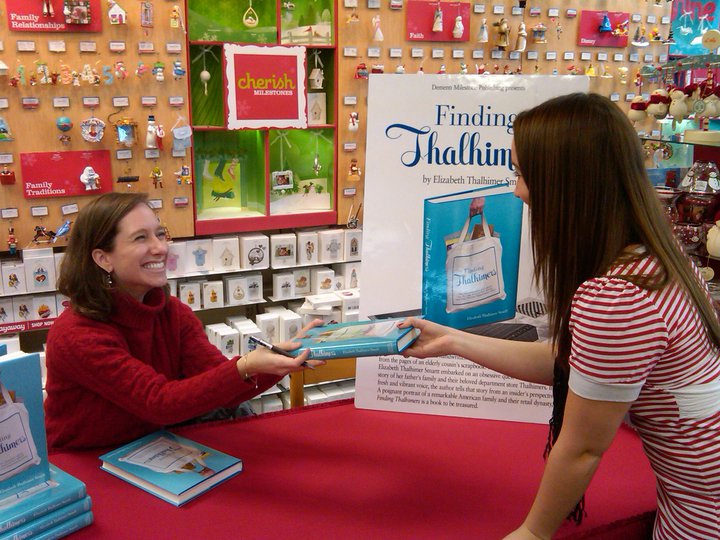


 Finding Thalhimers